





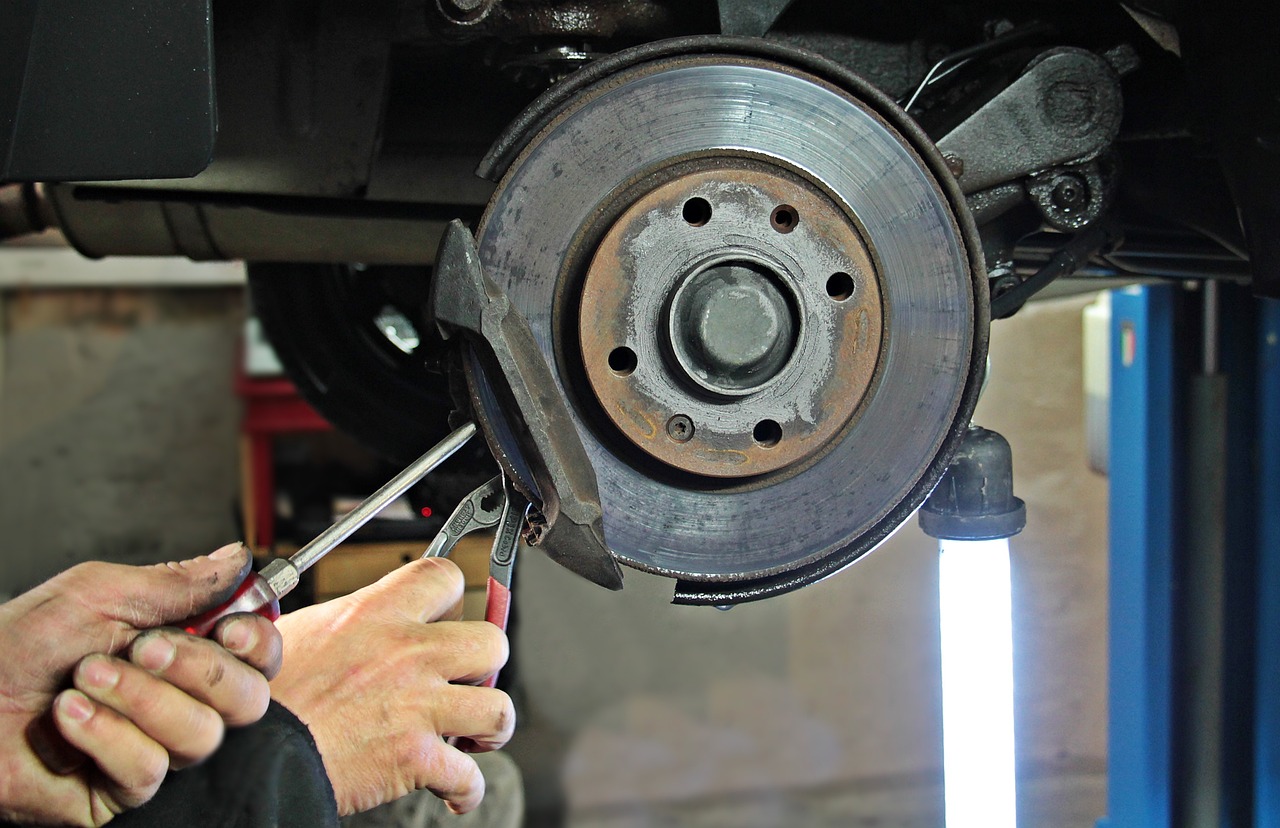
If your Chevy’s brakes aren’t working as smoothly as they used to, visit your local Chevy dealership right away for brake repair. Faulty brakes significantly increase the braking distance, making it much easier to get into an accident.
1. Visible Wear and Tear
Take a quick peek at your brake pads between the rotor and caliper on each wheel. Is there significant thinning of the pad material? If the pads look thin or severely worn out, you should replace them immediately. You should also replace the pads if there is uneven wear between the inner and outer pads to ensure smooth braking.
2. Screeching and Grinding Sounds When Braking
Loud, high-pitched squealing or grinding noises from your brakes are a telltale sign that the pads are worn out. The metal backing of the pads rubs against the rotor when the pad material becomes too thin, creating a nasty screeching sound. Don’t keep driving on worn brake pads, as you may completely lose braking power. Replace the pads immediately if you start to hear unusual noises when braking.
3. Vibrations in the Brake Pedal
Have you noticed your brake pedal pulsing or vibrating when you press on it? This annoying sensation is caused by warped brake rotors. Over time, heat and pressure can cause the rotors to become warped and no longer perfectly smooth.
When you brake, the caliper grabs the uneven rotor inconsistently, creating vibrations and pulses. Machining the rotors is required to restore a flat surface, so you can brake smoothly and quietly again.
4. Pulling Sensations When Braking
If your Chevy pulls to one side when braking, you likely have uneven brake pad wear on the front wheels. This happens when one caliper sticks, causing accelerated wear on just one pad. The imbalance in friction then pulls the vehicle towards the side with less braking power. To stop the pulling and uneven braking, you will need fresh brake pads installed and the rotors machined.
5. Spongy Brake Pedal
A spongy or soft pedal that lacks firmness could indicate a brake fluid leak or air in the hydraulic lines. Air reduces the pressure that transfers your pedal force to the wheels. Low fluid lets the pedal travel farther without resistance.
Either issue will increase the stopping distance and leave you at risk of accidents. So have your Chevy’s brake system checked by your dealer’s technicians. They will bleed the system to remove air bubbles, fix existing leaks, and top up the brake fluid to restore proper performance.
Your Chevy’s brakes are the most important safety components, so they should be in optimal working condition at all times. If you notice these signs or your ABS light comes on, reach out to Walker Chevrolet to schedule immediate repairs.
Connect with us

