





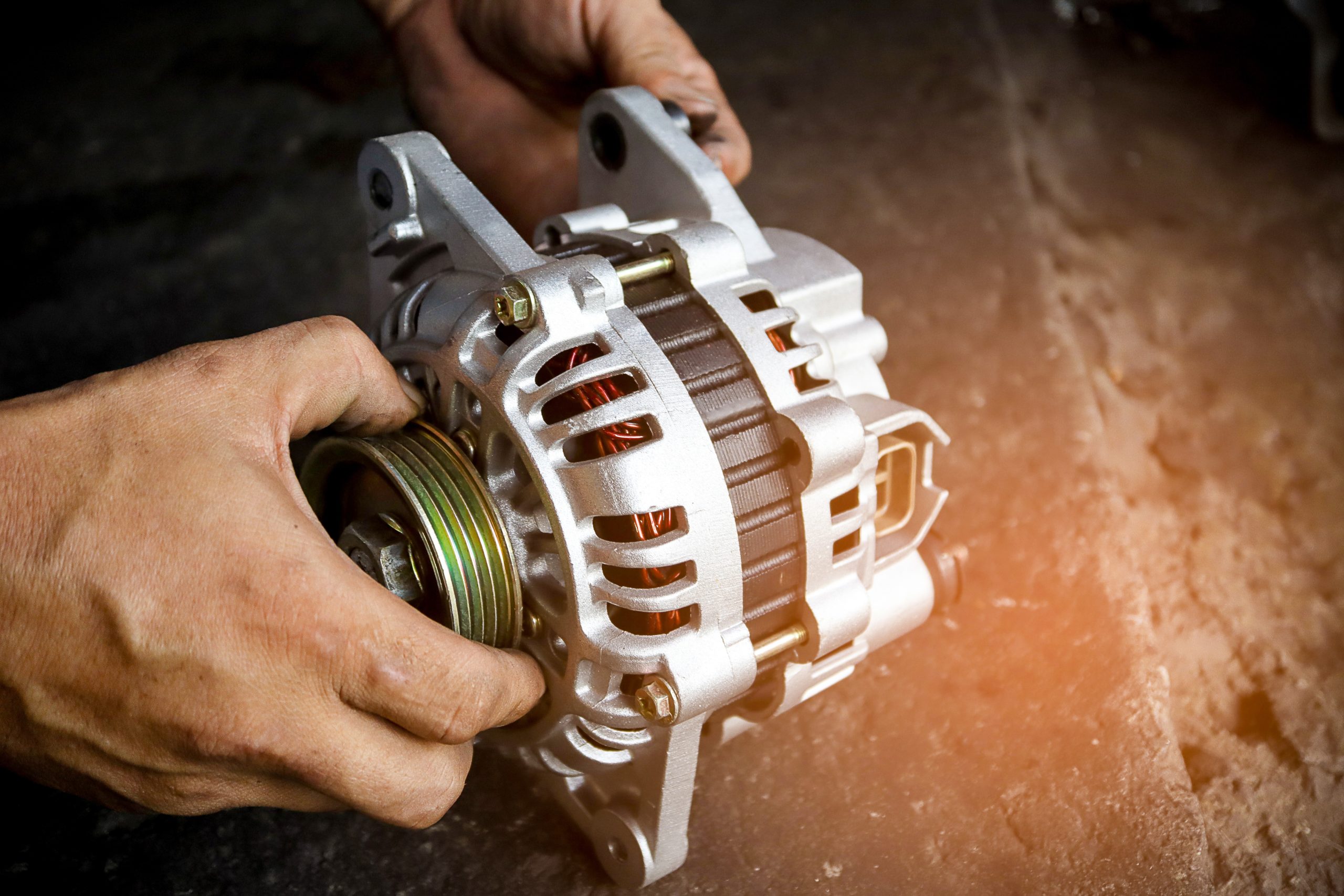
The alternator produces electricity for all your Chevy’s systems and accessories. It’s a simple yet robust component and can last for up to 100,000 miles. It can develop problems or suffer damage from other engine problems. As your Chevy dealer, we’d like to give you some tips on signs that you need to visit us for an alternator repair.
Slow Accessories
A healthy alternator produces more power than your car requires. If your alternator starts to fail due to age or damage, its electrical production will slowly drop. This problem isn’t noticeable when it begins but will become evident as time passes. As the electricity supply drops, it will impact your car’s systems and operation.
You’ll notice some accessories slow down, and others will stop for no apparent reason, only to restart a short time later. These seemingly random behaviors are due to the failing electricity supply. Your car’s computer has to decide on the best use of the limited available electricity, and this can mean withdrawing power from one component to supply it to another. Our technicians will examine your alternator and install a new one if necessary.
Dim or Flickering Lights
These two issues are usually connected to a problem with your alternator. As we’ve seen, a failing alternator will produce less electricity than your car’s systems require. All the systems in your car are assigned a priority by your Chevy’s computer, and these priorities are based on the component’s importance. The radio, for example, has a lower priority than your spark plugs or windshield wipers.
If the alternator’s output is too low to supply even the essential components, your computer will attempt to provide enough power for those components to operate at a minimum level. Dim lights mean that just enough power is assigned to the headlights to allow them to operate. Flickering lights mean fluctuating levels of power from the alternator. We’ll test your alternator and replace it if it’s wearing out.
Worn Rectifier
The rectifier is a tiny component in your alternator that converts electrical current. An alternator produces its electricity through a multi-stage process. The mechanical energy produced by the turning crankshaft causes the alternator pulley to spin. A bundle of magnets inside the alternator creates magnetic energy in response to this spinning motion. The magnetic energy is then converted to AC by the stator.
Your car’s systems require DC, and the rectifier converts AC to DC. If your rectifier fails, this conversion won’t occur, and your car will lose power. We can easily replace a worn rectifier to fix this problem.
If you’re experiencing any alternator problems, contact us today at Walker Chevrolet.
Connect with us

